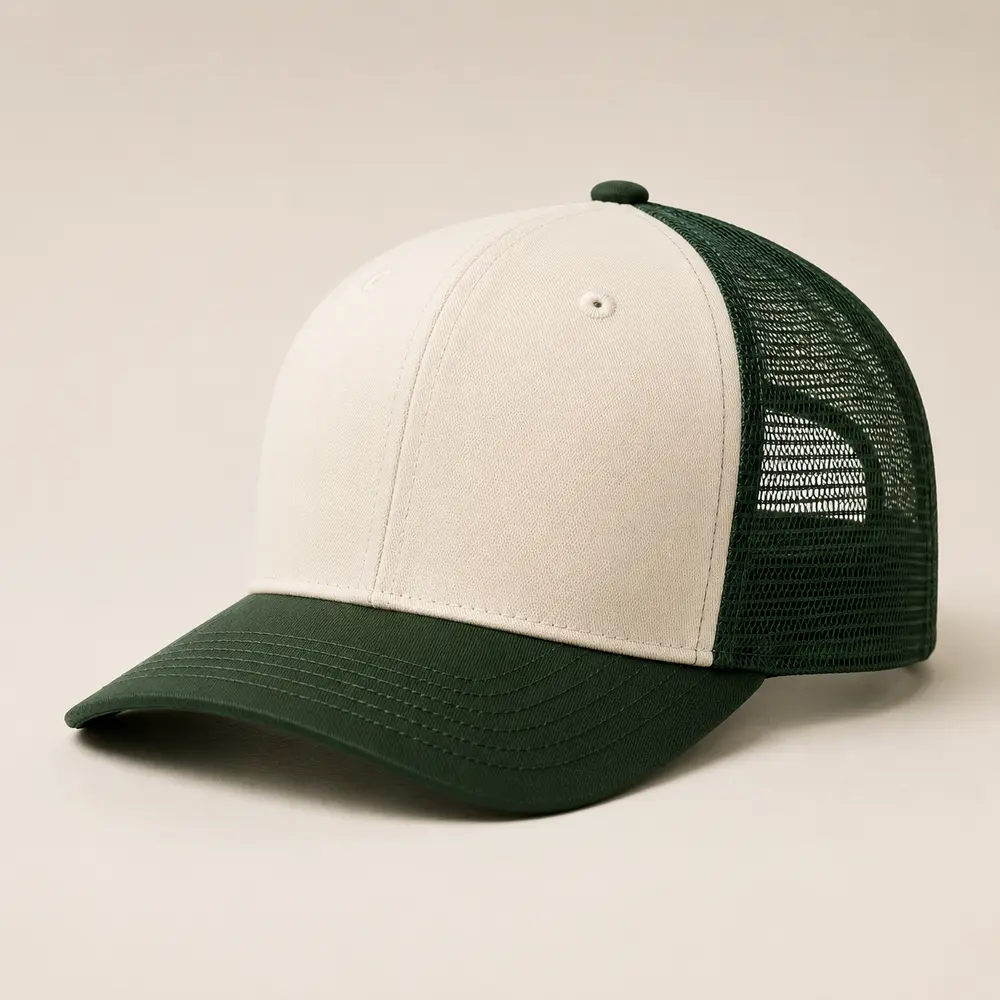
Starting a hat brand is easier when the first collection is treated as a focused product-development project instead of a large fashion launch. The most practical path is to define one clear customer, choose one or two cap constructions, prepare the branding files, develop a physical sample, approve the production specification and place a controlled first order.
For many LOSTCAPS custom headwear programs, standard cap projects can start from 50 pieces per design, while beanies commonly start from 100 pieces. Technical or non-stock fabric programs can require higher minimums. A typical development sample takes about 7–10 days after the main specification and artwork are confirmed. Production for 50–300 pieces is commonly around 15–18 days, while 500–1000 pieces is commonly around 20–25 days, subject to design, material, decoration and factory scheduling.
Quick answer: how do you start a hat brand?
Use this sequence:
- Define the customer and use case
- Choose one hero cap construction
- Prepare the logo and product brief
- Decide the private-label details
- Confirm the practical MOQ
- Develop and approve a physical sample
- Compare the complete landed quotation
- Place a focused first production order
- Inspect the finished goods
- Keep the approved specification for repeat orders
The objective of the first order is not to offer every possible style. It is to prove that one product can be manufactured consistently and sold to the intended customer.
1. Start with a customer, not a catalog
Before choosing a cap, define who will wear it and why they would buy it.
A running brand may prioritize light weight, quick drying, ventilation and reflective branding. A golf brand may focus on clean embroidery, premium closures and a polished retail finish. A streetwear label may care more about crown profile, fabric texture, brim shape and bold decoration. A workwear or outdoor brand may prioritize durability and utility.
Write down:
- Target customer
- Main use case
- Expected retail positioning
- Climate or activity
- Preferred visual style
- Target order quantity
- Delivery country
- Required launch date
This information helps a manufacturer recommend a practical construction rather than simply offering the cheapest blank.
2. Choose one hero cap for the first collection
A new brand usually learns more from one well-developed product than from five loosely specified products.
Common starting directions include:
- Baseball or dad caps for everyday lifestyle collections
- Trucker caps for outdoor, workwear, motorsport and American heritage directions
- Five-panel caps for streetwear, running and modern lifestyle programs
- Performance caps for running, clubs and active brands
- Golf caps for premium sport and resort collections
- Bucket hats for lifestyle, events and outdoor use
- Beanies for winter and knit programs
Browse custom headwear products for current headwear directions. If the first product is a classic baseball cap, compare custom baseball cap manufacturing. For mesh-back programs, review custom trucker cap manufacturing. For active-use collections, compare custom performance cap manufacturing.
Avoid choosing a cap only from a front photo. Crown height, panel construction, brim shape, closure, fabric weight and internal structure all affect the finished result.
3. Prepare a product brief before asking for a final quote
A quotation is more useful when every supplier prices the same specification.
Include:
- Front, side, rear and inside reference images
- Cap construction and crown profile
- Preferred fabric or desired hand feel
- Main color and secondary colors
- Logo files
- Logo size and placement
- Flat embroidery, 3D embroidery, patch, print or transfer
- Closure type
- Inside labels
- Hangtags or retail packaging
- Order quantity and color split
- Delivery country
- Required date
Use How to Prepare a Custom Cap Brief to organize the project and How to Prepare Logo Artwork for Custom Hat Embroidery: A B2B File Checklist to prepare artwork.
A clear brief reduces hidden assumptions and makes supplier comparison more meaningful.
4. Decide how private label the product needs to be
There is a large difference between adding a logo to an existing cap and developing a complete private-label product.
A basic branded project may include:
- Existing cap construction
- Front embroidery
- Standard closure
- Standard inside labeling
A fuller private-label program can include:
- Custom fabric or color
- Modified pattern or crown shape
- Custom embroidery or patches
- Woven brand label
- Care and composition label
- Size label
- Branded seam tape
- Custom closure or hardware
- Hangtag
- Barcode or SKU label
- Individual retail packaging
Review private label hat manufacturing when the goal is a repeatable branded product rather than a one-time promotional cap.
Do not add every custom component just because it is available. For the first order, prioritize details that the customer can see, feel or use.
5. Plan the MOQ around the product, not around a target number
MOQ depends on the complete specification.
Typical LOSTCAPS planning references include:
- Many standard baseball, trucker, snapback and bucket-cap projects: from 50 pieces
- Beanies: commonly from 100 pieces
- Performance caps using existing fabrics and colors: from 50 pieces in many cases
- Non-stock colors, special technical fabrics or more complex development: potentially 300 pieces or more
Read Low MOQ Branded Caps: What Buyers Need to Know Before Ordering before splitting a small order across too many colors or designs.
For a first order, a focused 50–300 piece program can be more practical than spreading the same quantity across many SKUs. Fewer variations make sampling, production control and customer feedback easier to manage.
6. Develop a physical sample
A digital mockup confirms direction, but it does not confirm fit, fabric behavior, embroidery quality or construction.
For a new specification, approve a physical sample before bulk production.
Check:
- Overall silhouette
- Crown height and depth
- Fit and adjustment range
- Brim length, width and curve
- Fabric hand feel
- Color
- Embroidery shape and density
- Logo size and placement
- Inside labels
- Closure and hardware
- Stitching and seam quality
- Packaging
A typical LOSTCAPS development sample is around 7–10 days after the key specification and artwork are confirmed. Revisions add time, so build approval time into the launch calendar.
Use Custom Cap Sample Approval Checklist for the physical review.
7. Compare manufacturers on the complete project
Do not choose a supplier from unit price alone.
Compare:
- Experience with the intended cap type
- Ability to explain construction choices
- Sample quality
- Communication speed and clarity
- MOQ
- Material availability
- Decoration capability
- Quality-control process
- Production lead time
- Packaging support
- Export and shipping experience
- Repeat-order consistency
Use How to Compare Custom Hat Manufacturers: 10 Questions for B2B Buyers for a structured comparison.
A lower unit price is not automatically cheaper if the supplier requires more revisions, substitutes materials or produces inconsistent repeat orders.
8. Understand what changes the cost
Custom hat pricing is normally influenced by:
- Quantity
- Cap construction
- Fabric
- Custom dyeing
- Number of colors
- Embroidery size and stitch complexity
- Number of decoration positions
- Patches or specialty trims
- Custom labels
- Hardware
- Packaging
- Freight and destination
Use What Affects the Price of a Custom Cap? to understand which specifications should be fixed before comparing quotations.
Ask suppliers to separate optional upgrades where possible. This makes it easier to decide which details improve the product enough to justify the additional cost.
9. Build a realistic launch timeline
A simple planning timeline can look like this:
Product brief and supplier review
Allow time to confirm the cap shape, fabric, colors, artwork and private-label requirements.
Sample development
A typical development sample may take about 7–10 days after the specification is confirmed.
Sample review and revision
Allow time for shipment, fitting, internal review and any correction round.
Bulk production
Typical planning references are around 15–18 days for 50–300 pieces and around 20–25 days for 500–1000 pieces, subject to the style, material, decoration and current production schedule.
Freight and receiving
Shipping time is separate from manufacturing time. Confirm the delivery method and destination before setting a launch date.
Do not announce a fixed launch date based only on the production lead time. Sampling, revisions, holidays, material sourcing and freight can all affect the project.
10. Approve a production specification, not only a sample photo
Once the sample is approved, retain the information needed to reproduce it.
The production file should record:
- Approved cap construction
- Measurements
- Fabric and color
- Logo artwork
- Logo dimensions and placement
- Thread or Pantone references
- Labels
- Closure
- Hardware
- Packaging
- Color and quantity split
- Approved sample reference
- Revision date
This becomes one of the most valuable assets of the brand because it makes future orders faster and reduces accidental changes.
11. Keep the first order commercially focused
The first order should answer three questions:
- Does the customer like the product?
- Can the supplier reproduce it consistently?
- Can the brand reorder it profitably?
Avoid unnecessary complexity such as too many colors, multiple crown shapes, several logo techniques and custom packaging systems in the same small launch.
Start with a strong hero product, then use sales feedback to decide what belongs in the second collection.
12. Plan the repeat order before the first order ships
Before bulk production is complete, decide what information should be retained for reordering.
Keep:
- Approved sample
- Final artwork
- Material codes
- Thread colors
- Measurements
- Label files
- Packaging files
- Supplier quotation
- Production photos
- Inspection notes
When a product performs well, the second order should not restart the development process from zero.
For a manufacturing partner that supports concept review, sampling, private label and repeat production, review OEM headwear manufacturing and private label hat manufacturing.
A simple first-order checklist
Before paying for bulk production, confirm:
- Target customer is defined
- Hero cap is selected
- Final product brief is approved
- MOQ is confirmed
- Sample is physically approved
- Logo size and placement are confirmed
- Fabric and color are confirmed
- Labels and packaging are confirmed
- Production lead time is confirmed
- Shipping method and destination are confirmed
- Final quantity split is confirmed
- Repeat-order specification is saved
If any of these items is still unclear, resolve it before bulk production whenever possible.
FAQ
How much money do I need to start a hat brand?
There is no single correct starting budget because the total depends on quantity, construction, decoration, private-label components, samples, packaging and freight. Build the budget from the complete specification rather than multiplying a generic cap price. Review What Affects the Price of a Custom Cap? for the main cost drivers.
What is the minimum order for starting a custom hat brand?
Many standard LOSTCAPS cap programs can start from 50 pieces per design. Beanies commonly start from 100 pieces, while special technical fabrics, non-stock colors or more complex custom development can require higher minimums. Confirm the final MOQ after the specification and color split are known.
Should a new hat brand start with one style or several?
One or two focused styles are usually easier to develop, inspect and market than a wide first collection. A strong hero product gives clearer customer feedback and creates a cleaner repeat-order specification.
Do I need a tech pack before contacting a manufacturer?
No. A complete tech pack is helpful but not required to start. Clear reference images, logo files, quantity, preferred material, target market and delivery country are enough for an initial review. The specification can then be refined before sampling.
Should I use a private-label manufacturer or buy blank hats?
Blank hats can be practical for very simple or very small promotional needs. A private-label manufacturing program is more suitable when the brand needs a controlled fit, custom materials, internal labels, packaging and a repeatable product specification.
How long does it take to launch a custom hat?
The total schedule includes specification review, sampling, sample shipment, possible revisions, bulk production and freight. A typical development sample is around 7–10 days after confirmation, while common bulk-production references are around 15–18 days for 50–300 pieces and around 20–25 days for 500–1000 pieces. Exact timing depends on the project and production schedule.
How do I choose a reliable hat manufacturer?
Compare the supplier on the intended cap type, sample quality, communication, material control, MOQ, production process, inspection, packaging, export support and repeat-order consistency. Use How to Compare Custom Hat Manufacturers: 10 Questions for B2B Buyers to compare suppliers against one specification.
What should I send LOSTCAPS to start a project?
Send the closest cap reference, logo file, target quantity, preferred colors or material, delivery country and required date through request a custom headwear quote. LOSTCAPS can then review the manufacturing path, sampling requirements and practical MOQ before a final quotation.