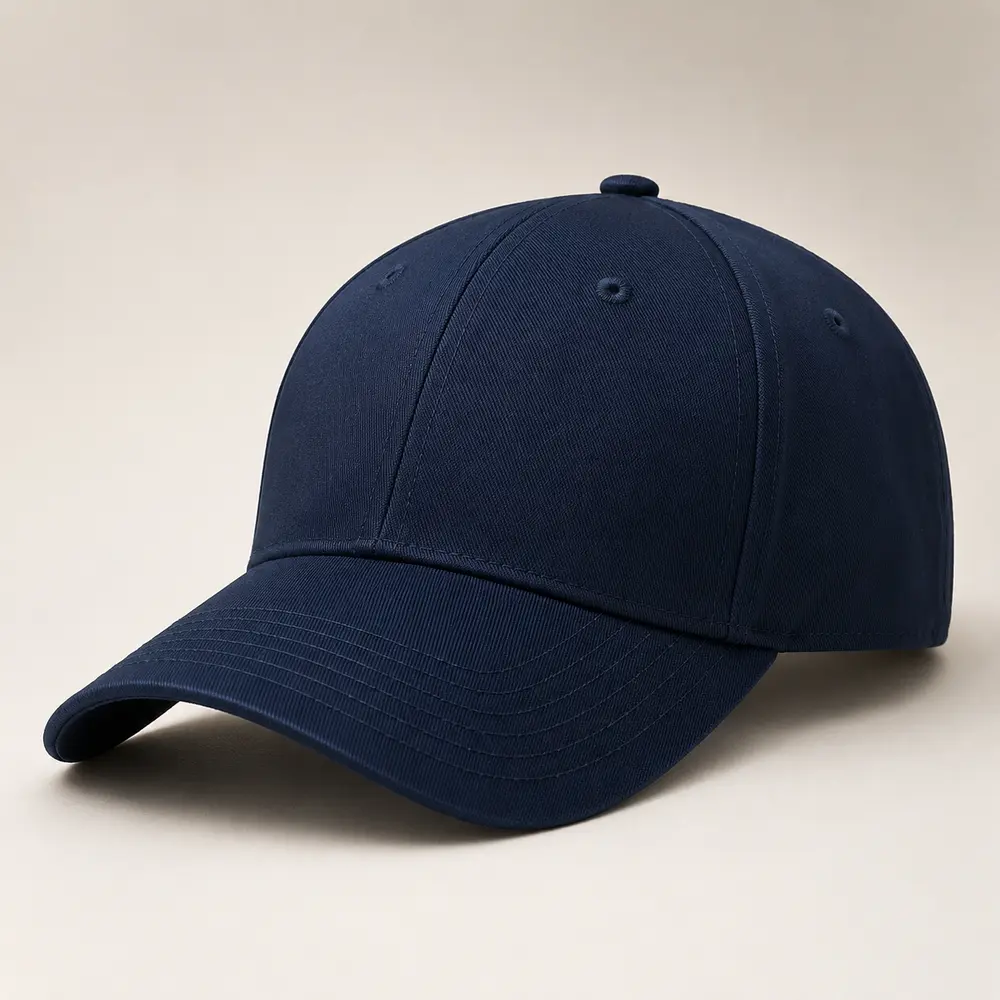
A baseball cap has more specifications than its outer color and front logo. Its crown panels, top button, ventilation eyelets, brim, sweatband, internal seam tape and rear closure all affect how it looks, fits and can be customized. Knowing the correct names makes it easier to brief a supplier and approve a production sample.
Quick answer: what are the main parts of a baseball cap?
The most common components to identify in a custom baseball cap specification are:
- Crown or panels: the fabric pieces that form the main body
- Top button (squatchee): a fabric-covered button found on many, but not all, caps
- Eyelets: sewn or metal-edged ventilation openings where used
- Brim or visor: the projecting front shade, with upper and under-brim fabrics
- Brim insert: the internal material that helps the visor hold its form
- Sweatband: the band on the inner circumference touching the forehead
- Inside seam tape: tape covering or finishing interior panel seams
- Lining or buckram: optional internal support materials, depending on the construction
- Back closure: a snap, buckle, hook-and-loop strap or another fit solution; fitted caps have no adjustable closure
These names help you specify what to change and what to leave as standard. Not every cap contains all nine features.
1. Crown and panels: where the cap gets its shape
The crown is the cap body above the brim. Panel number alone does not determine fit. Pattern shape, front reinforcement, fabric stiffness, crown height and seam design work together.
Five-panel caps
Many five-panel constructions offer a front layout with fewer seams crossing the main logo area, but five-panel designs vary considerably. Check the actual front pattern and side profile.
Six-panel caps
A common six-panel baseball cap has a center-front seam. This can change embroidery placement, especially for small text or a large central motif. The seam is not automatically a defect or a reason to avoid the style.
Structured versus unstructured crowns
A structured crown uses support to hold a defined front shape. An unstructured cap is softer and can sit closer to the head. Ask for side-view photos and a physical sample before deciding.
Read 5-Panel vs 6-Panel Caps: Which Construction Fits Your Brand? and Cap Crown Profiles and Fit: A Buyer’s Guide to compare crown construction.
2. Top button: functional assembly detail or design accent?
A top button is commonly a small fabric-covered component at the crown intersection. It may match the crown or use a contrasting color. Some technical and five-panel designs omit it.
If changing the button, specify its color, finish, placement and whether it needs to match another trim. Decorative metal components must be assessed for secure attachment and comfort rather than selected on appearance alone.
3. Eyelets: sewn holes, metal eyelets or no eyelets?
Sewn eyelets are often made with stitching in matching or contrast thread. Metal eyelets have a different visual finish. Location, count and opening size should be specified, not inferred from a photograph.
Eyelets can contribute to airflow, but total ventilation also depends on crown material, mesh and other construction features. A technical running cap may use mesh panels or engineered perforations instead.
See How to Specify Eyelets and Ventilation for Custom Caps: A B2B Buyer Guide for sourcing and sample checks.
4. Brim, visor, upper brim and under brim
The brim, also called the visor or peak, shades the face and strongly influences the silhouette. The upper brim is the visible top fabric and the under brim is the underside fabric. A separate insert inside helps create the intended shape.
A buyer should confirm:
- Brim length and width measured using a stated method
- Curved, pre-curved, flat or flexible design
- Material and color of the upper brim
- Material and color of the under brim
- Stitching rows and any edge finishing
- Whether the insert needs to hold its shape or flex
Do not assume that matching the brim fabric will create the same curvature as a reference cap. Pattern, insert and manufacturing method also matter.
Use How to Measure a Custom Cap Visor: Brim Length, Width and Curve to record brim dimensions clearly.
5. Sweatband: the part that meets the skin
The sweatband is sewn around the inside lower edge. Its width, texture, composition and absorbency influence comfort. A premium-looking outer cap can still feel uncomfortable if the sweatband is too stiff, rough or bulky.
Review the sweatband against the intended use: casual retail, high-heat golf, running or promotional wear. Test comfort on the physical sample rather than making performance claims from material names alone.
See How to Choose a Sweatband for Custom Caps: A B2B Buyer Guide.
6. Inside seam tape: construction and branding
Interior tape covers panel seams and can be part of a cleaner finish. Common choices include matching tape, contrast tape and printed branded tape.
Specify tape width, material, seam placement and print design, and request an interior photograph. Inspect whether tape is secure, straight and comfortable. Printed tape may add setup or minimum-order requirements.
Read How to Specify Inside Taping for Custom Caps: A B2B Buyer Guide and How to Plan Inside Branding for Custom Caps.
7. Lining and internal crown support
Some caps have additional internal lining, reinforcement or buckram in front panels. These materials can help control shape, but they also change weight, drape and comfort.
Do not use the word lining to mean seam tape, sweatband or front buckram interchangeably. Identify which component you want and show its location in a sample photograph.
8. Back closure: how the cap adjusts
Common choices include plastic snapback, self-fabric strap with metal slider, hook-and-loop and leather-style strap with buckle. Fitted caps are graded by size and have no rear adjuster.
Compare adjustment range, security, appearance, fit, hardware finish and branding potential. Custom molded hardware or special trims can change MOQ and tooling costs.
See How to Choose a Closure for Custom Baseball Caps for closure options, and Running Cap Rear Closures: How to Choose Straps, Buckles and Elastic for performance use.
9. Head circumference and the difference between fit and cap size
Measure around the head above the ears, across the forehead and around the most prominent part at the back. The tape should be level and comfortably snug, without pulling tight.
A person's measured head circumference is not necessarily identical to a flat cap measurement or a finished cap specification. Pattern ease, adjustable range, sweatband, crown depth and wear preference all matter. Age or gender-based size tables are estimates, not universal fit rules.
For a brand-size range, specify the intended wearer, target head circumference range and how the cap will be evaluated on a fitting sample.
How to turn cap anatomy into a useful manufacturing brief
Send the supplier more than one front-view photo. A clearer package includes:
- Front, left or right side, back, top and inside photographs
- Selected cap style and five- or six-panel construction
- Structured or unstructured crown and approximate profile
- Cap fabric, composition, weight or approved physical sample
- Upper and under-brim colors, curvature and measurements
- Top-button and eyelet decisions
- Sweatband, lining and inside seam tape selections
- Closure type, material and adjustment range
- Logo artwork, precise size, placement and decoration method
- Inside labels, hang tags and packaging requirements
- Target quantity by design and color, plus delivery country
If you have a physical reference cap, ask how to send it for pattern and fit review. A digital mockup may confirm visual direction, but a physical sample is needed to assess construction and fit.
Read How to Photograph a Reference Cap for Custom Development: A B2B Buyer Guide, How to Prepare a Custom Cap Brief and Custom Cap Sample Approval Checklist for the next steps. Browse customization options for the wider custom-headwear process.
FAQ
What is the difference between a cap crown and a cap panel?
The crown is the complete body of the cap; panels are the fabric pieces assembled to create that crown.
Is the brim the same as the visor?
For baseball caps, brim, visor and peak often refer to the projecting front shade. In a detailed specification, distinguish the upper brim, under brim and internal insert.
Does every six-panel cap have a top button?
Many do, but not every custom construction requires one. Confirm against the selected pattern and sample.
Is seam tape the same as the sweatband?
No. Seam tape finishes interior crown seams, while the sweatband runs around the inside lower edge and contacts the head.
Can I customize all cap components on a small order?
Options depend on material availability, existing components and the full specification. Common cap programs may start at 50 pieces, but custom-dyed fabric, specialized hardware and proprietary trims can require higher minimums.
How can I request a custom cap based on a photo?
Send clear front, side, back and inside reference views, a logo file, required quantity and delivery country through request a custom headwear quote. Add a physical reference sample or detailed measurements when shape and fit must closely match.