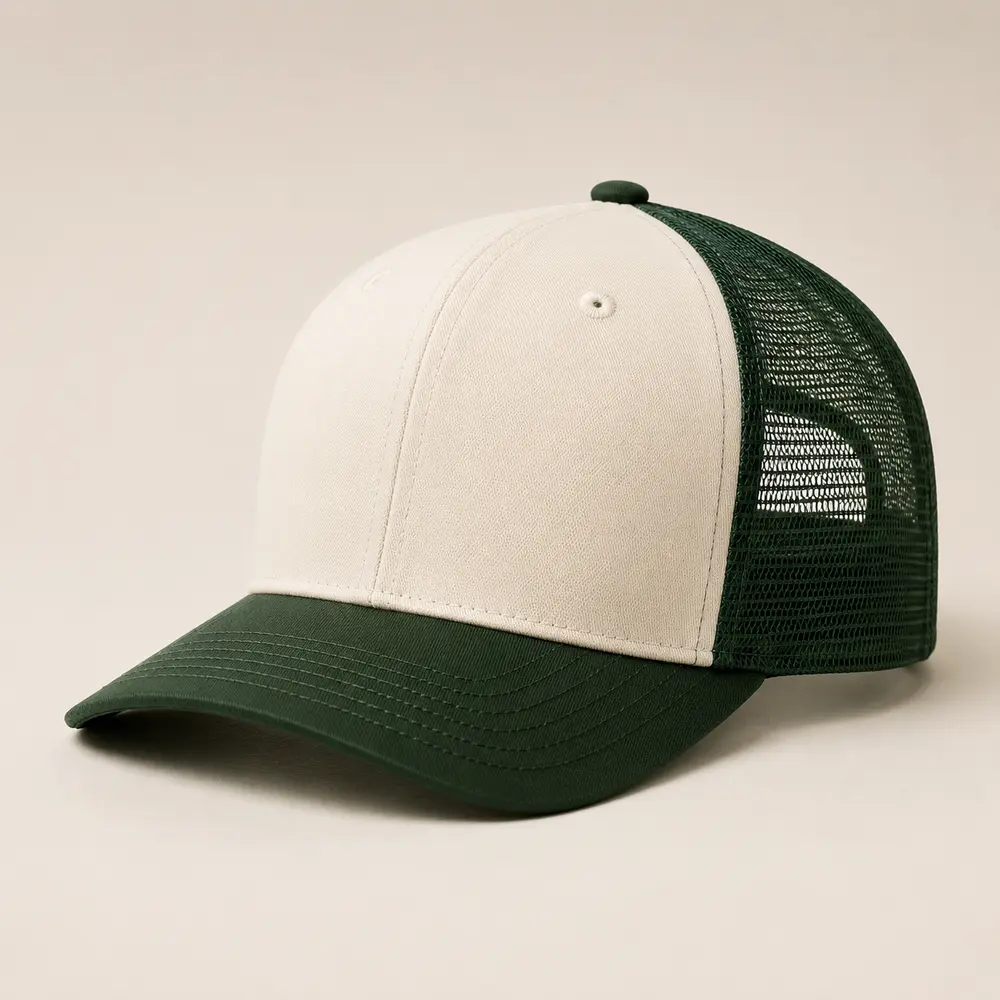
A cap crown profile describes how high and how deep the cap sits on the head. Buyers often use terms such as low profile, mid profile and high crown, but the final fit also depends on panel shape, structure, fabric, brim, rear opening and closure.
Quick answer: what does a high crown hat mean?
A high-crown hat has more vertical height in the crown, especially at the front. It usually creates a taller, more upright silhouette and gives more visible front area for embroidery, patches or other branding. High crown does not automatically mean a larger head size; crown height and circumference are separate fit variables.
For a custom project, compare side-view photos and actual crown measurements rather than relying on the words high, mid or low profile alone.
Low-profile crown
A low-profile cap sits closer to the head and usually creates a relaxed silhouette. It is common in soft dad caps and casual washed cotton styles. The lower front area can limit the height of tall logos, so artwork size and vertical placement should be reviewed on the physical sample.
Low profile can work well when the buyer wants:
- A softer everyday fit
- Less upright front-panel height
- A casual or vintage direction
- Smaller front branding
Browse /products/classic-cotton-dad-hat for one low-profile direction and review How to Specify Logo Placement on a Custom Cap: A B2B Buyer Guide before locking a tall front logo.
Mid-profile crown
A mid-profile crown balances front branding space with a more moderate overall height. It is common across baseball caps and trucker caps because it can suit a broad range of brand, team, workwear and promotional programs.
Buyers should still confirm the side profile, crown depth and front-panel angle. Two caps both described as mid profile can fit differently when one uses firmer front reinforcement or a deeper rear crown.
Browse /products/classic-mid-profile-mesh-trucker-cap for a trucker-cap starting point.
High-profile crown
A high-profile crown creates a taller front surface and a more pronounced silhouette. It is often used for structured trucker caps, flat-brim caps and streetwear-inspired programs where the cap shape and front branding need stronger visual presence.
High-profile projects should confirm:
- Front crown height
- Front-panel angle
- Crown depth
- Structured or foam-front reinforcement
- Brim shape and proportion
- Logo height and placement
A taller crown can support a larger logo, but the artwork still needs to fit the panel shape and decoration method.
Structured versus unstructured crowns
A structured cap uses reinforcement behind the front panels to help the crown hold its shape. This can create a stable surface for embroidery, patches and a consistent retail silhouette.
An unstructured cap has a softer crown that follows the wearer’s head more closely. It is common in washed dad caps and other relaxed lifestyle styles. The softer surface can change how embroidery sits and how the crown appears when the cap is not being worn.
Neither construction is automatically better. Choose the one that matches the intended silhouette, logo method and wearer expectation.
Crown height is not the same as crown depth
Crown height describes vertical height, while crown depth describes how far the cap extends around or down the head. A cap can have a relatively tall front but still feel shallow if the side and rear pattern do not provide enough depth.
When fit matters, ask the supplier to explain which measurements define the pattern and keep the same measurement method between the reference, sample and bulk production.
Panel count and front seams
Five-panel caps can provide a broad uninterrupted front surface, while six-panel caps usually have a center-front seam. Trucker caps may combine foam, cotton twill, canvas or polyester fronts with mesh rear panels.
Panel count affects shape and logo placement, but it does not define crown height by itself. Pattern geometry, reinforcement and fabric stiffness all influence the final profile.
Review 5-Panel vs 6-Panel Caps: Which Construction Fits Your Brand? when panel construction is still being decided.
Brim shape and crown proportion
The brim should be evaluated together with the crown. A flat brim can emphasize a taller structured profile, while a curved or pre-curved brim can create a more familiar sports or casual direction.
Confirm:
- Brim length and width
- Flat or curved direction
- Curve intensity
- Brim stiffness
- Front crown height
- Front-panel width
- Overall side profile
Use How to Measure a Custom Cap Visor: Brim Length, Width and Curve when exact visor dimensions matter.
Closure and rear opening affect fit
A snapback, fabric strap, buckle, hook-and-loop closure or fitted construction changes the rear opening and adjustment range. It can also change how the cap sits at smaller and larger settings.
Do not use the closure as a substitute for choosing the correct crown pattern. A cap that is too shallow or too deep will not necessarily be corrected by more rear adjustment.
Review How to Choose a Custom Hat Closure: Snapback, Buckle and Fit Guide before finalizing the rear construction.
How should buyers compare two crown profiles?
Use the same viewing angles and compare the complete silhouette:
- Straight front view
- Side view
- Rear view
- Three-quarter view
- Worn fit on the intended wearer
- Front crown height
- Crown depth
- Brim angle and curve
- Rear opening and closure position
If you have a physical reference cap, send clear photographs and measurements or provide the reference itself. A single front-facing image is usually not enough to communicate fit.
What should be approved on the physical sample?
Check:
- Overall crown height and depth
- Structured or unstructured behavior
- Front-panel angle and shape
- Side silhouette
- Brim proportion
- Fit at common closure settings
- Logo size and placement on the actual crown
- Symmetry from front and rear
- Comfort on the intended wearer
Use Custom Cap Sample Approval Checklist for the wider approval process.
What to include in a custom cap fit brief
Send:
- Front, side and rear reference photos
- Intended wearer and use case
- Low, mid or high-profile direction
- Structured or unstructured preference
- Five-panel or six-panel direction when known
- Brim shape
- Closure type
- Head-size range
- Critical measurements if available
- Logo size and placement
- Closest existing cap or physical reference
If you do not know the technical terms, marked reference photos and simple notes are enough to begin. Use How to Prepare a Custom Cap Brief to organize the full development request.
FAQ
What does high crown mean on a hat?
It means the crown has more vertical height, usually creating a taller front profile. It does not automatically mean the cap fits a larger head circumference.
Is a low-profile cap the same as an unstructured cap?
No. Low profile refers mainly to crown height and silhouette, while unstructured describes how much reinforcement the crown uses. A cap can combine these traits, but they are not the same specification.
Does a five-panel cap always have a higher crown?
No. Panel count and crown profile are separate decisions. A five-panel cap can be low, mid or high profile depending on the pattern and construction.
Which crown profile is best for 3D embroidery?
There is no single best profile. A stable front surface and enough usable logo area help, but artwork shape, size, panel seams and reinforcement also matter. Approve the complete decorated sample.
Can a closure fix a cap that feels too shallow?
Not reliably. Rear adjustment changes circumference, but crown depth and pattern shape determine how the cap sits on the head.
Should I measure crown height from a reference cap?
Yes when shape is important, but agree the exact start and end points so the supplier and buyer use the same method.