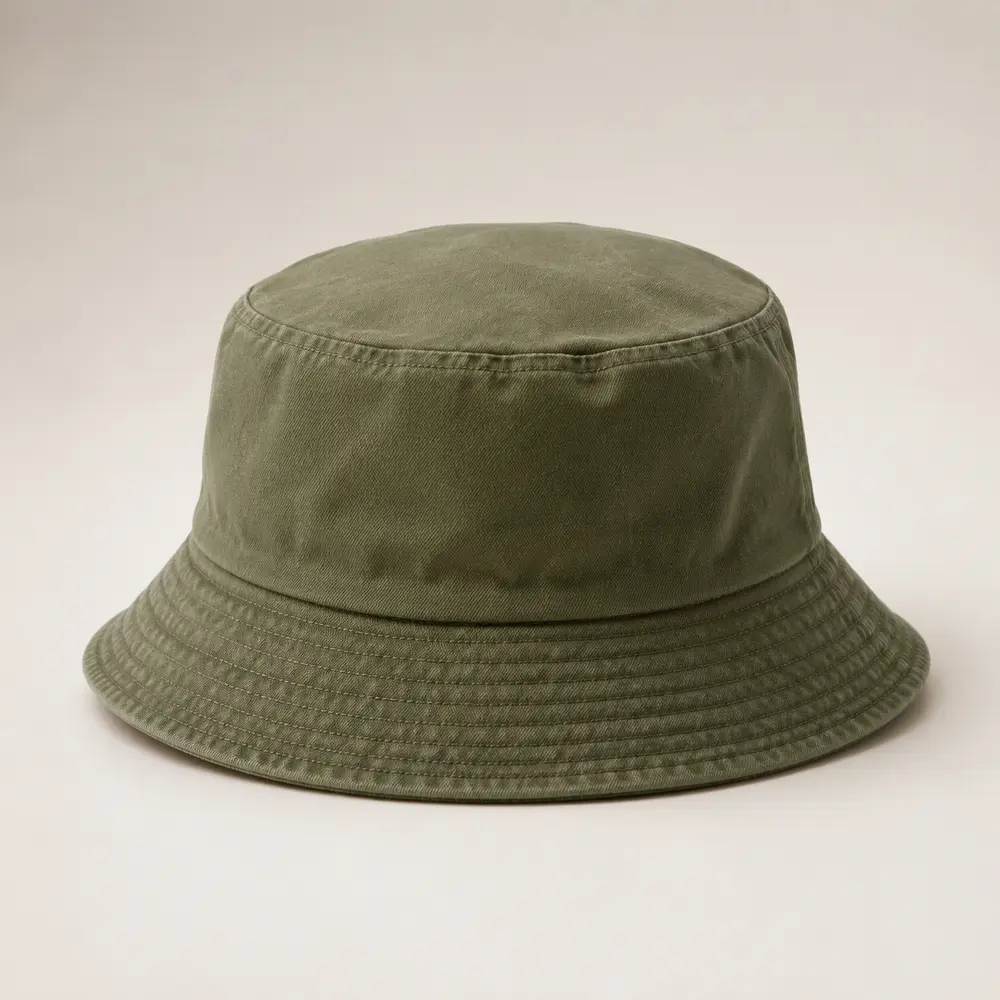
A reference photo can show the style of a bucket hat, but it cannot reliably tell a manufacturer the crown depth, brim width, slope or finished fit. For a custom bucket hat order, record these dimensions separately, confirm the fabric and stitch construction, and approve an actual sample before bulk production.
Quick answer: what dimensions matter on a custom bucket hat?
The most useful starting dimensions are the inner head opening or intended head-circumference range, crown depth, top-panel dimensions, brim width, brim slope and the position where each measurement is taken. A physical reference sample helps when the buyer wants to match a specific silhouette.
Unlike a baseball cap visor, a bucket hat has a continuous brim all the way around the crown. A single “brim width” from a front photo is not enough if the front, side and back widths are intended to differ.
1. Measure the head opening and crown depth separately
**Head fit** refers to how the hat sits around the wearer's head. Use a flexible tape to measure head circumference, then specify the desired wearing feel and useful size range. See How to Measure Head Circumference for Custom Caps: B2B Size & Fit Guide for the measuring method.
**Crown depth** is a construction measurement. Agree with the manufacturer on the exact start and end points: the top-crown reference point and the finished lower crown edge or sweatband line. Record the method alongside the number so that two samples can be compared fairly. A curved top panel or slanted side band can make arbitrary vertical measurements misleading.
Do not assume that a head circumference in centimeters equals the finished opening measurement of every hat pattern. Lining, seam allowances, sweatband thickness and shaping all affect fit.
2. Specify top-panel shape and side-crown height
A bucket hat is commonly built from a top crown panel and a side band. The top panel may be circular, oval or otherwise shaped. Its size and the side-band angle influence the hat silhouette.
Compare these two buyer directions:
- **Relaxed, casual bucket hat:** softer drape, a more rounded or relaxed crown and a brim that hangs naturally.
- **Structured or utility bucket hat:** a more defined crown and brim shape, depending on chosen material and interlining.
Neither direction is guaranteed simply by changing fabric composition. Ask for a side view, top view and a worn fit sample. Review the labeled parts at Bucket Hat Anatomy: Parts, Brim Construction & Customization Guide.
3. How to measure brim width correctly
Lay a physical hat on a level surface without stretching the fabric. Starting where the brim joins the crown, measure outward toward the finished edge. Take separate measurements at the front, both sides and back if the pattern is not uniform.
Record whether you measured along the brim surface or as a flat horizontal projection. Those two methods give different values when the brim angles downward, so include a diagram or photograph showing the measuring points.
Also specify:
- Finished edge shape and whether the edge is bound or turned
- Number, spacing and direction of visible brim stitch rows
- Desired brim stiffness and whether it should fold or hold shape
- Outer and under-brim fabric and color
- Desired appearance when the hat is worn, not just when laid flat
Do not copy an approximate measurement from a product photograph unless there is a physical scale or an approved measurement sheet.
4. Brim slope changes the final look
Two bucket hats with the same measured brim width can look completely different. A steeper downward slope can frame the face more closely; a flatter brim projects outward differently.
For approval, ask for three consistent photographs of the physical sample: front, side and three-quarter view on a headform or wearer. Include a top-down photo to review whether the edge is even around the hat. Ask the manufacturer to record any pattern adjustments between sample rounds.
5. Choose fabrics based on the construction you want
Cotton twill is an everyday starting point, while canvas can support a more substantial hand feel. Washed fabrics create a softer, vintage appearance. Nylon or polyester constructions may be useful for lightweight travel or outdoor-oriented concepts, but exact performance depends on weave, weight, finishing and testing.
Check how the fabric behaves around the crown-to-brim seam and along multiple stitch rows. A heavy or bulky fabric may alter how a narrow brim curves; a very light fabric may need additional construction support to keep a shape.
Use How to Choose Fabric for Custom Caps and Hats and How to Choose Fabric Weight for Custom Caps for material decisions. If matching a brand color, approve fabric swatches rather than relying solely on digital Pantone display. See Pantone Color Matching for Custom Hats: A B2B Buyer’s Approval Guide.
6. Details that affect finished construction
Depending on the design, you may need to specify sewn or metal eyelets, sweatband, full or partial lining, care label, brand label, chin cord and inner stitching. Not every bucket hat needs eyelets or a lining.
If the project is reversible, both sides must be planned as usable outer surfaces. Review exposed labels, seam finishes, embroidery backing and contrast stitching before approving the sample.
For sun-protection claims, do not assume a wide brim alone provides a particular UPF rating. Any UPF or waterproof claim should be supported by appropriate evidence for the finished specification.
Bucket hat measurement worksheet for buyers
Send this brief to a supplier with your reference photos or sample:
- Target wearer measurements and size range, in centimeters
- Crown top shape and dimensions, with measuring points
- Crown depth and side-band angle, with measuring points
- Brim width at front, sides and back
- Brim slope, stiffness, stitch rows and edge finish
- Outer fabric, weight, construction and color references
- Under-brim, sweatband and lining choices
- Eyelets, trims, logo technique and precise placement
- Reversible construction requirements, if applicable
- Quantity per style, color and size, and delivery destination
For a complex shape, attach front, side, top and inside photos of the same reference hat. A physical reference sample is especially helpful when matching fit and hand feel.
How to approve the pre-production sample
First, compare the sample to the signed measurement sheet, then try it on the intended head-size range. Look at crown depth, side profile, brim symmetry, edge stitching, lining comfort and the position of the logo when worn. Check that color and texture match approved material swatches.
Record revisions in a dated checklist. If the fabric, lining or interlining changes after fit approval, retest the final construction before bulk production. See Custom Cap Sample Approval Checklist.
FAQ
What is the difference between brim width and crown depth?
Brim width measures the outward distance from the crown-to-brim seam to the finished brim edge. Crown depth describes the crown's vertical fit dimension using an agreed measurement method. They are not interchangeable.
Does a wider brim always give better sun protection?
Not automatically. Protection also depends on brim angle, coverage, fabric, wearing position and testing. Avoid unverified UPF promises.
Can LOSTCAPS develop a bucket hat from a photo?
A clear photo can start the discussion, but exact construction and fit should be defined with more reference views, dimensions and a physical sample. A supplied reference hat can help clarify the intended shape.
Can the front and back brim widths differ?
Yes, patterns can use different widths around the crown. Specify each measurement and review the result from multiple angles.
What information is needed for a custom bucket hat quote?
Provide target fit, crown and brim dimensions, fabric and color requirements, logo artwork, quantities and delivery country. Optional trims and reversible construction should be specified before a final quotation.
Explore custom bucket hats for style references, customization options for available customization steps, or send your brief through request a custom headwear quote to discuss sampling and bulk production.