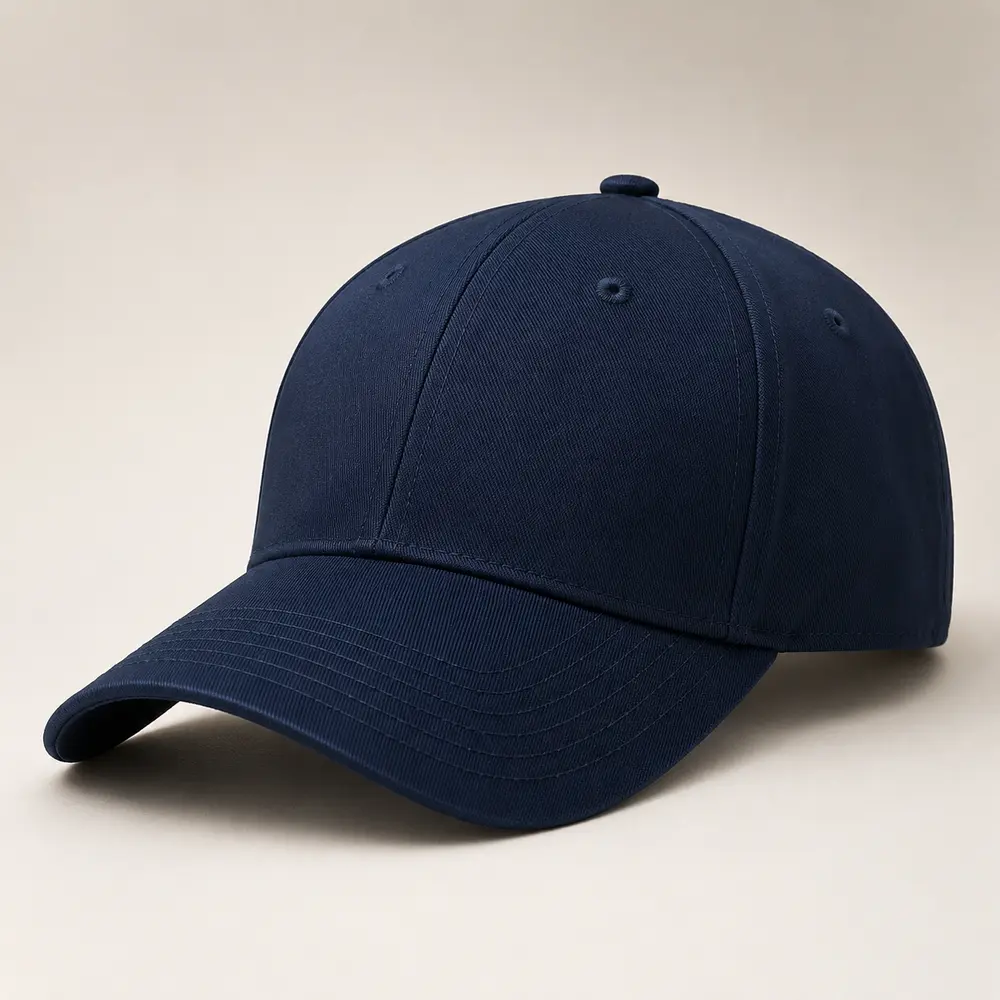
For custom caps, head circumference is a starting measurement—not a guarantee of fit. Two caps labeled 58 cm can feel different because crown depth, panel pattern, fabric, sweatband and rear adjustment all change how they sit. Buyers should measure consistently, specify the intended size range and approve fit on actual samples.
Quick answer: how do you measure head circumference?
Use a flexible tape measure around the head at the position where the cap's sweatband would normally sit: across the forehead, above the ears and around the fullest part of the back of the head. Keep the tape level, snug but not tight, and record the measurement in centimeters. Repeat twice to check consistency. If using string, mark it and measure the length against a ruler.
Step-by-step measurement instructions
- Stand naturally and keep your head level.
- Place the tape across the forehead at your intended hat position, usually slightly above the eyebrows rather than directly at the hairline.
- Route the tape above both ears and around the prominent part of the back of the head.
- Check that the tape is not twisted and is at an even height.
- Read the tape without pulling it into the skin.
- Record the result in centimeters and repeat it.
- If measurements differ, repeat carefully and use a consistent result rather than rounding aggressively.
Hair volume and preferred wearing position affect comfort. A snug athletic cap and a relaxed lifestyle cap may call for different fit evaluations even when head circumference is the same.
Head size and cap size are not identical
Head circumference measures the wearer. Cap size describes a finished product's nominal sizing, which can depend on the brand and construction. Adjustable closures also have a usable range rather than one fixed size. Avoid assigning a size based only on gender or age.
For a custom order, specify the actual measurement range, intended fit and tolerance you want tested. Ask the supplier to confirm whether the proposed cap pattern and closure can serve that range.
Practical size reference for buyers
The following measurements are illustrations for developing a size brief, not universal age- or gender-based standards:
- 54 cm: a possible smaller adult or youth fit reference
- 56 cm: a possible medium-size fit reference
- 58 cm: a common adult fit reference
- 60 cm: a possible larger-size fit reference
- 62 cm: a larger-fit development reference
These are circumference examples only. They do not establish the dimensions of a finished cap or indicate who must wear each size. For babies and young children, use age-appropriate safety requirements and measured sizes rather than assuming an age chart is accurate.
What else changes the fit?
Crown depth and profile
Low-profile crowns sit differently from deep, structured crowns. A cap may reach the intended circumference but still feel too shallow or too tall. Request side-profile photos and an on-head fitting test.
Five-panel versus six-panel construction
Panel geometry changes the shape of the crown, especially around the forehead and temples. Compare 5-Panel vs 6-Panel Caps: Which Construction Fits Your Brand? before choosing a base shape solely from a front view.
Sweatband and fabric
A padded or thick sweatband changes the internal feel. Fabric stiffness and stretch influence how the crown settles. If the project uses stretch or technical woven fabric, test fit after wear and adjustment.
Rear closure
A plastic snapback, self-fabric strap with slider, hook-and-loop closure and fitted construction provide different adjustment behavior. Consider usable range, pressure, slippage and the way loose strap ends are secured. Read How to Choose a Closure for Custom Baseball Caps.
How to prepare a cap-sizing specification
Provide the following information alongside the artwork and cap references:
- Intended wearer group and market, without treating age or gender as a size standard
- Target head-circumference range in centimeters
- Desired fit: close, relaxed, deep or low-profile
- Crown and brim reference photos, including side and inside views
- Adjustable closure type and target useful adjustment range
- Material and sweatband construction
- Whether ponytail access or special rear openings are needed
- Proposed size labels and acceptable finished-garment tolerances
- Quantity by size, color and style
- Physical reference cap when a particular existing fit must be matched
If you have a reference sample, describe both the head measurements it fits and the relevant finished-cap dimensions. A reference cap's outer brim width cannot substitute for an internal fit check.
Sample approval: measure the cap and test it on wearers
Review the proposed sample on people within the target measurement range. Record which rear adjustment positions they use, how securely the cap stays in place and whether pressure develops above the ears or across the forehead. Compare front, side and rear appearance. Check whether the crown retains its shape and whether the sweatband is comfortable after prolonged wear.
For production approval, use a written measurement sheet and agreed tolerances for the selected style. Different crown constructions should not automatically share the same measurement template. See Custom Cap Sample Approval Checklist.
Common mistakes when ordering custom fitted caps
- Using an age-based chart without measuring actual wearers
- Treating a 58 cm head measurement as the exact finished internal circumference
- Choosing a cap from a front-only photo
- Approving a closure without testing its minimum and maximum settings
- Failing to specify crown depth and profile
- Comparing measurements without agreeing where and how they were taken
- Switching fabrics or sweatbands after approving the fit sample
How LOSTCAPS can help
Send your target circumference range, sample or reference photos, preferred cap profile, materials, decoration and quantities through request a custom headwear quote. LOSTCAPS can help organize fit questions and sample development before bulk-production confirmation. Browse customization options for further choices.
FAQ
Where should the measuring tape sit?
At the position where the cap will normally sit: across the forehead, above the ears and around the fullest part of the back of the head. Keep it level and comfortably snug.
Does a 58 cm head always fit a cap marked 58 cm?
Not necessarily. Pattern shape, sweatband thickness, adjustability and brand sizing can affect fit. Confirm the finished sample.
Should children's hat sizes be selected by age?
No. Ages are unreliable substitutes for actual head measurements. Measure the wearer and apply appropriate children's product safety requirements.
Can one adjustable cap fit everyone?
No. Every closure has a usable range, and crown depth can still feel wrong even if the strap closes. Establish the range with fit testing.
What measurements should a buyer send for a custom cap?
At minimum, provide a target head-circumference range and preferred fit, then add crown and brim references, closure choice, fabric, size grading and any reference sample.