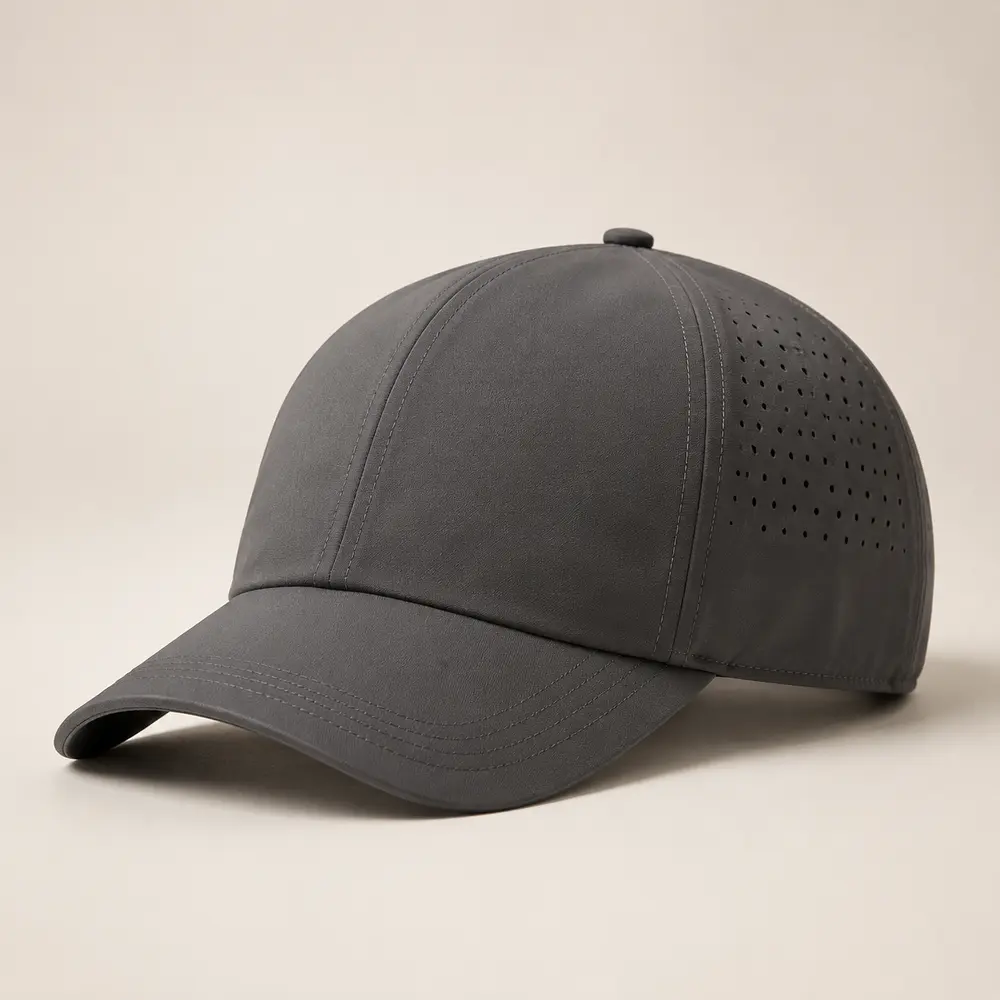
Reflective logos on custom running caps should be approved as a complete decoration system: the artwork, transfer or print material, placement, cap fabric, visibility in different lighting, wash-care instructions and finished sample. A bright-looking digital mockup cannot prove nighttime reflectivity or durability. Before bulk production, ask for a physical sample and confirm the agreed inspection conditions.
Quick answer: what should a buyer approve?
Approve the actual logo on the actual cap fabric, not a detached swatch alone. Check the logo's physical size, placement, daylight appearance, reflective response under a controlled light source, edge adhesion, flexibility and any care limitations. Record the accepted sample, material reference and artwork version in the purchase specification.
Choose the decoration process before finalizing artwork
Reflective heat transfer
A reflective heat-transfer film may suit clean text, symbols and technical graphics on compatible fabrics. The supplier must check bonding temperature, pressure and dwell time against the selected cap material. Thin nylon or stretch fabrics may require a different process than cotton twill. Do not assume a film that works on a T-shirt will bond identically to a curved cap panel.
Reflective printing or other applications
Reflective inks or other reflective decoration systems may be considered where the design, fabric and order requirements allow. Ask the supplier what process is actually proposed and how its appearance and care performance will be tested. Do not treat all reflective finishes as equivalent.
Embroidery versus reflective details
Conventional embroidery is useful for many logos, but ordinary thread is not automatically reflective. A mixed design can use embroidery for brand identity and a separate reflective element for visibility. Confirm whether the additional decoration changes hand feel, placement or production setup. See How to Prepare Logo Artwork for Custom Hat Embroidery: A B2B File Checklist for artwork preparation.
Specify the logo with measurable details
Send an editable logo file when available, plus a visual reference showing the intended cap style. State:
- Finished logo width and height in millimeters.
- Exact panel and distance from the nearest seam or edge.
- Whether the mark is intended to be subtle in daylight or visually prominent.
- The cap fabric, colorway and stretch direction.
- Approved logo color and reflective appearance reference.
- Decoration method and minimum acceptable line or gap width.
- Whether the same logo is used across every colorway.
- Expected use, cleaning method and intended delivery market.
Avoid asking only for a reflective white logo. Some materials appear silver or gray in ordinary light and respond differently to illumination.
Test placement on the finished crown
The front, side and rear of a running cap have different curvature, seams and stretching behavior. A graphic placed close to a seam, vent or closure may wrinkle or lift. A small rear mark may be useful for the design brief, but do not imply that a reflective cap replaces safety lighting or high-visibility equipment.
Review the finished cap from the front, side and rear. Check the logo at normal wearing distance, with the cap adjusted to the intended fit. Compare the proposed placement against performance headwear and custom performance caps before approving the pattern.
How to check reflective appearance without making unsupported claims
Photograph the approved sample in consistent conditions: first in ordinary daylight, then under the same directed light source, distance and camera settings. Record the setup so revised samples can be compared fairly. Smartphone flash photographs can illustrate an effect but are not a standardized reflectivity test.
If a brand intends to claim a particular reflectivity rating, visibility standard or protective function, request the appropriate independent test documentation for the specified material or finished product. Do not publish a numerical performance claim based on a supplier photo.
Adhesion, flexibility and care checks
Inspect the logo edges before and after reasonable handling. Flex the crown as it would move during wear, then check for cracking, lifting, wrinkling or surface damage. Agree a cleaning or laundering method and ask whether the finish is compatible with it. If the cap is packable, test the logo after repeated folding according to the approved use case.
Different fabrics, coatings and water-repellent finishes can affect adhesion. Any fabric substitution after approval should trigger a new decoration check rather than automatic acceptance.
A practical pre-production approval checklist
- Approved cap silhouette, fabric and colorway.
- Artwork version and actual printed dimensions.
- Confirmed decoration process and material.
- Front, side and rear placement photographs.
- Daylight and controlled-light comparison images.
- Adhesion, flexibility and care review.
- Agreed sample sign-off and any limitations.
- Approved packaging and handling notes.
- Final quantity, delivery destination and production schedule.
Keep the approved sample and written specification together. Use Custom Cap Sample Approval Checklist for the full cap approval process, customization options for branding options and request a custom headwear quote to send your technical cap brief.
FAQ
Is a reflective logo always visible at night?
No. Visibility depends on illumination, viewing angle, logo area, material and surrounding conditions. A reflective detail is not a substitute for dedicated safety equipment.
Can reflective transfers be used on water-repellent nylon?
Possibly, but compatibility must be checked on the exact coated or finished fabric. Do not assume the same adhesive process works on every technical textile.
Should buyers approve the logo on every cap color?
Approve a representative sample for each materially different fabric or colorway where contrast, adhesion or appearance could change. Agree the sampling scope before production.
Does a reflective logo change the minimum order quantity?
It can, depending on the chosen decoration material, setup and artwork. Ask for a quotation against the complete specification rather than assuming a universal MOQ.