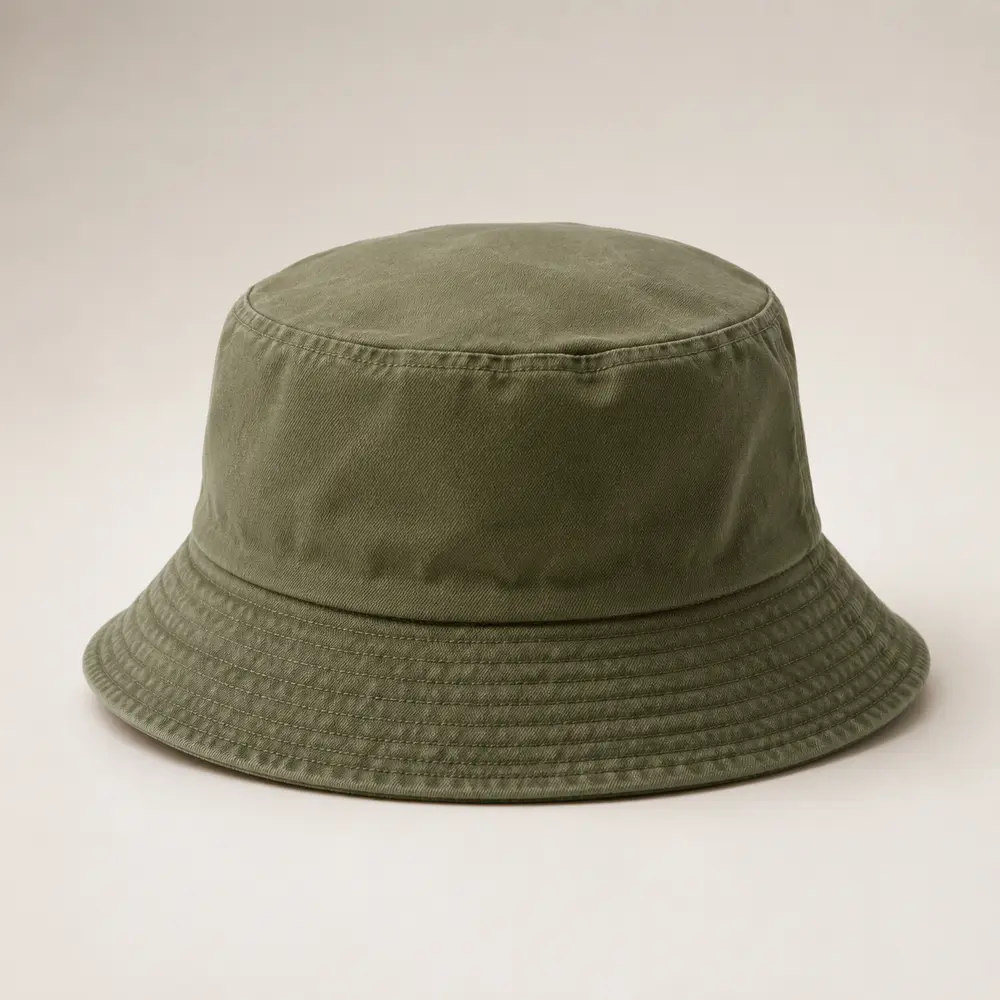
A wholesale bucket hat order should begin with the way the hat will be worn and sold, not with one reference image. A classic cotton bucket hat, a genuinely reversible construction and a soft packable style can look similar in a catalog but require different decisions about fabric, seams, labels, logo placement, folding and sample approval.
This comparison is for overseas brands, resort retailers, clubs, outdoor-merchandise buyers and distributors preparing a private-label specification. It focuses on sourcing trade-offs rather than promising that every feature is available on every existing model.
Quick answer: which custom bucket hat should you choose?
- **Classic cotton bucket hat:** a practical starting point for casual brand collections, retail embroidery and familiar cotton hand feel. Prioritize fabric weight, crown shape, brim stitching and wash consistency.
- **Reversible bucket hat:** useful when two wearable looks are part of the product concept. Approve the appearance, seams, labeling, branding and comfort of both sides rather than treating the reverse as a hidden lining.
- **Packable bucket hat:** suitable when the buyer needs a softer hat for travel, events or compact packing. Verify fold recovery, brim behavior and decoration after repeated handling; do not assume every cotton or nylon hat is packable.
These are construction choices, not mutually exclusive fabric categories. A cotton bucket hat may also be reversible or packable, but each combined requirement must be developed and sampled.
1. Compare the three routes before requesting a quote
Classic cotton: straightforward styling and branding
A classic cotton style often gives a familiar, soft appearance for lifestyle ranges, teams and promotional collections. Cotton twill, washed cotton and other cotton fabrics do not all behave alike. Fabric weight, dyeing, finishing, lining and brim stitch density change drape and hand feel.
A suitable catalog reference is /products/custom-pastel-cotton-bucket-hat, which shows an embroidered cotton style in selected colors. Treat its photographs as a starting point, not as confirmation of every available color or logo execution.
Specify whether you want a clean flat crown, relaxed side wall, washed effect, stitched brim, eyelets and interior sweatband. If the buyer wants a vintage wash, approve actual fabric and color after treatment instead of relying only on a color swatch.
Reversible: two finished exteriors, not a hidden lining
A reversible hat needs two surfaces that can both be worn outward. Its construction must manage exposed seams, stitch appearance, sweatband treatment, side-to-side color compatibility and branding so that neither direction looks like the unfinished interior of a normal hat.
Compare the actual catalog references at /products/reversible-fishing-bucket-hat and /products/custom-reversible-tie-dye-bucket-hat. The latter shows a patterned side and a plain black reverse. The available fabric, colors and decoration must be reconfirmed for the particular order.
Ask whether the logo should appear on one side, both sides or on a removable hang tag. Embroidery on one face may leave backing or reverse stitches visible on the other, so the construction and decoration sequence need review. Care and origin labels also require an agreed location that does not spoil either wearing side.
Packable: approve recovery, not just the ability to fold
A hat can be physically folded without being a satisfactory packable retail product. A packable specification should state how it is packed, how long it remains folded, what its intended unfolded appearance should be and which creases or shape changes are acceptable.
LOSTCAPS has an existing /products/custom-packable-cotton-bucket-hat reference with a soft crown and stitched brim. Its product detail describes cotton fabric, outline or flat embroidery and private-label options subject to artwork review.
Ask to see the same physical sample before folding, in its proposed packaging and after unfolding. Evaluate brim waviness, crown creases, seam distortion and logo appearance. Do not describe an untested style as crease-proof, waterproof, UV-rated or guaranteed to recover fully.
2. Specify fit and brim before choosing decoration
Record the target head-size range or graded sizes, finished head opening, crown depth, top-panel dimensions, brim width, brim slope and stitch pattern. A one-size label is not a substitute for approved fit measurements.
Measure the brim at the front, sides and back when shape differs around the circumference. Also record whether measurements follow the fabric surface or a horizontal projection. Photographs with a ruler and front, side and three-quarter views make sample approval more repeatable.
Use How to Measure Bucket Hat Brim Width and Crown Depth for Custom Orders for the detailed measurement method and Bucket Hat Anatomy: Parts, Brim Construction & Customization Guide to identify construction parts. Those guides cover anatomy and measurements; this article concentrates on selecting a wholesale construction and approving production details.
3. Match the logo method to the construction
Flat embroidery is a common starting point for cotton bucket hats, but its result depends on logo size, stitch density, fabric, placement and any lining. Check the finished sample for puckering or a stiff patch of fabric around large filled areas.
For reversible hats, decide whether a visible reverse side of embroidery is acceptable. If not, review another branding plan, a two-layer construction or alternate label placement with the factory. Never assume a standard one-sided logo process will look finished from both sides.
For packable hats, check whether the logo or patch stays comfortable and presentable after folding. A large stiff badge may work against a soft packing objective. Heat transfer, patches and embroidery are options to evaluate based on actual fabric and use; not every method suits every finish.
Send vector logo artwork when possible, final dimensions in millimeters, colors, placement and any requirements for inside labels, hang tags or retail packaging. See customization options for available branding methods.
4. Approve material and color for the actual use
**Cotton options:** choose by hand feel, color, wash method and required structure, then approve a sample of the actual fabric. Cotton is not automatically quick-drying or water-resistant.
**Polyester or nylon options:** these may suit lighter outdoor-oriented concepts, but fiber content alone does not establish breathability, water resistance, UV protection or durability. Request verified technical evidence before making a performance claim.
**Reversible combinations:** compare both sides under the same light, and review bleed, show-through and seam appearance when dark and light colors are combined. Custom prints and special fabric colors need a separate feasibility and quantity review.
If you need a Pantone reference, provide the code and discuss how the chosen fabric and process will be approved. A Pantone code alone cannot guarantee a perfectly identical result across different materials.
5. Understand the real wholesale MOQ
For an ordinary custom bucket hat using an available construction and feasible materials, the LOSTCAPS starting point is **50 pieces per color and style**. The minimum is not 50 pieces total split across unrelated colorways or designs. For example:
- 50 olive bucket hats with one approved specification: meets the ordinary starting quantity, subject to confirmation.
- 25 olive plus 25 black of the same hat: does not meet the 50-piece-per-color minimum.
- 50 cotton hats plus 50 reversible hats: quote as separate styles; the combined quantity does not replace style-level minimums.
Special custom colors, prints, materials or new construction can require a different minimum. A catalog reference does not guarantee that every requested variation qualifies for 50 pieces. Ask for a line-item quote showing the confirmed MOQ for each color and construction before committing to a launch plan.
6. Budget sampling and production realistically
A regular custom headwear sample is generally planned at **7–10 days** after the specification, artwork and sample payment are confirmed. Additional fabric development, reversible engineering or complex artwork may need more time.
Typical bulk production planning for established specifications is **15–18 days for 50–300 pieces** and **20–25 days for 500–1,000 pieces** after approval, subject to the selected style and production schedule. These are planning ranges, not guaranteed arrival dates. Shipping, holidays and destination-country customs clearance are separate.
Ask the supplier to quote the sample fee, any special development or setup charge, unit price, approved packaging, shipping terms and the point at which the bulk-production clock starts. Do not approve a total price without separating colorways and special construction costs.
LOSTCAPS works with brands and overseas buyers with **15 years of manufacturing and export experience**. The most useful proof for a particular order remains the approved sample, written specification and agreed production checks rather than a generic marketing statement.
7. Use one physical sample checklist for all three styles
Review the finished sample with the actual logo, trims and packaging before bulk approval:
- Front, side, top and three-quarter silhouette on a head form or wearer
- Head opening, crown depth, top shape, brim dimensions and stitch rows
- Fabric composition and visual color against approved references
- Comfortable seams, sweatband, ventilation details and care labeling
- Exact logo dimensions, placement, edge finish and visible reverse side
- Both wearing faces for reversible construction, including labels and seams
- Packaged, folded and unfolded appearance for a packable claim
- Color transfer or wash checks appropriate to the approved materials
- Hang tags, woven labels, polybag or retail packaging as specified
- Correct size and color identification for carton and SKU control
Keep photos, an approved physical sample and a versioned specification. If fabric, pattern, brim, logo method or lining changes after approval, ask what must be re-sampled.
8. Send a quote-ready wholesale bucket hat brief
A useful initial inquiry contains:
1. Intended use: retail fashion, clubs, resorts, festivals or outdoor merchandise 2. Preferred construction: classic cotton, reversible or packable 3. Catalog reference or own sample and desired changes 4. Material, color references and quantity **per color and style** 5. Fit range, crown depth, brim width and expected structure 6. Logo artwork, position, method and whether both sides require branding 7. Inner labels, care labels, hang tags and packaging 8. Ship-to country, requested delivery timing and shipping terms 9. Whether you need an approval sample before the first bulk run
Browse the verified custom bucket hats collection and the listed product references, then send your specification using request a custom headwear quote. The team can confirm which details work on an existing style and which require fresh development.
FAQ
Is a reversible bucket hat the same as a lined bucket hat?
No. A lining is normally an interior layer. A reversible hat is intended to be worn with either side outward, so both surfaces, seams and branding must be finished and approved for that use.
Is cotton always the best fabric for a wholesale bucket hat?
Not always. Cotton can be suitable for everyday lifestyle styling, while other fabrics may better fit a different target feel or use. The approved fabric and complete construction matter more than fiber name alone.
Can a reversible bucket hat also be packable?
Possibly, if the combined fabric layers, seam finishes, brim and decorations recover acceptably after folding. Request a physical test of that exact combination instead of assuming both features are compatible.
Can I order 20 pieces in each of three colors?
Not under the standard 50-pieces-per-color-and-style starting minimum. Confirm the quantity and construction by color before requesting a final price.
Does a 7–10 day sample timeline include international delivery?
No. It is a typical sample-making planning range after confirmation; transit time is quoted separately.
Do all bucket hats provide sun protection or waterproof performance?
No such rating should be assumed from a bucket shape, fabric name or marketing photograph. If a project needs verified UPF or water-performance claims, request test evidence for the actual material and finished construction.