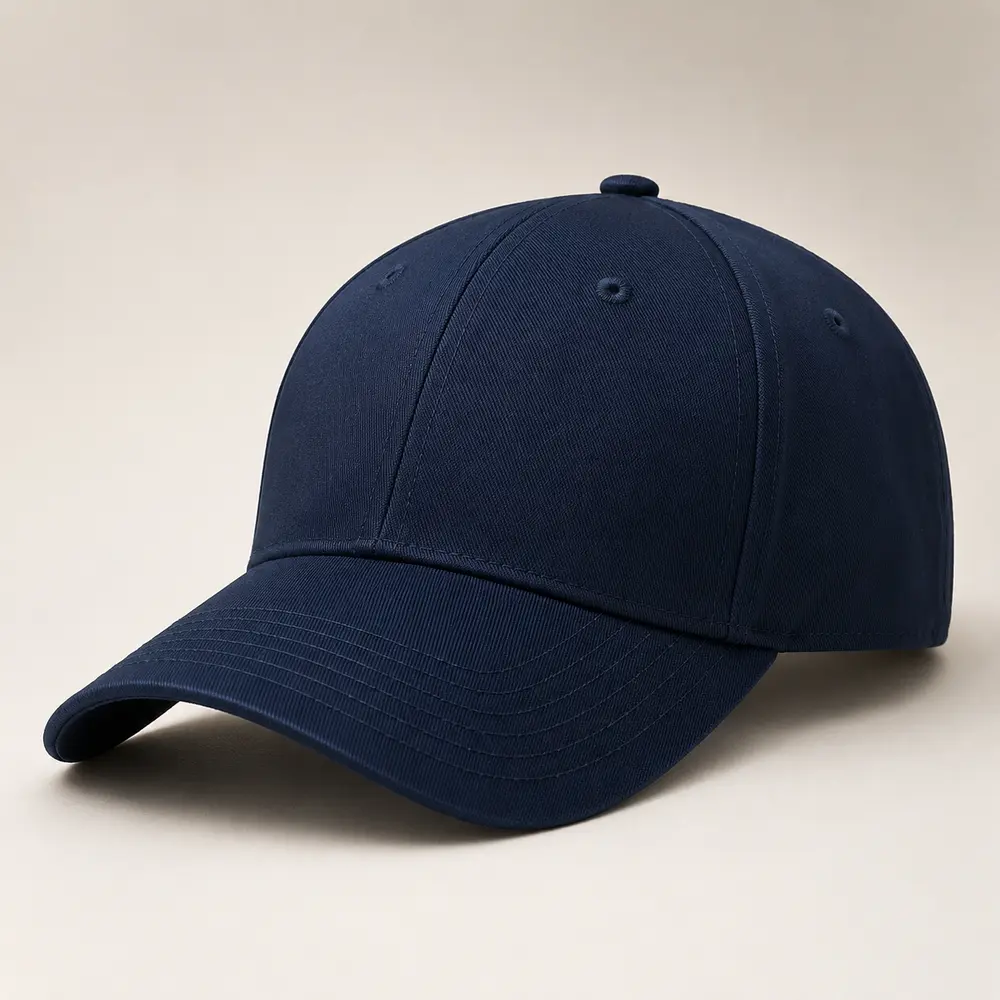
Custom ponytail caps need more than a rear opening in a standard baseball cap. A buyer should specify the opening position, usable width and height, hair clearance, crown profile, adjustment system, sweatband continuity and branding placement before approving the sample. A reference photo communicates the look; a dimensioned drawing and wear test establish what the factory should make.
Quick answer: what should I include in a ponytail cap brief?
Send the target wearer and use case, reference photos from the front, side and rear, desired ponytail position, crown height, opening dimensions, closure type, fabric, brim shape, logo files, order quantity and delivery market. Ask the supplier to confirm whether an existing pattern can be adapted or whether a new pattern is needed. The exact opening must be approved on a physical sample.
High ponytail opening versus standard rear gap
A conventional adjustable cap leaves a small gap above the closure. A high-ponytail design adds a purpose-built opening higher on the back crown. The higher opening can suit some ponytail and bun positions, but the right location depends on hair volume, head shape and intended fit. Do not assume that one opening position works for every wearer.
Ask for a straight rear photograph with a ruler and a side profile of the sample worn with hair through the opening. Confirm whether the opening is an oval, slit, elastic-edged aperture or shaped panel construction. Each option affects stretch, finishing and available decoration space.
Record measurements using the finished cap
- Opening top and bottom position measured from a defined rear crown seam or lower edge.
- Finished opening width and height in millimeters, measured without pulling the fabric.
- Crown front height, rear height and head-circumference adjustment range.
- Opening edge construction: bound, folded, elasticized or otherwise reinforced.
- Closure location, strap length and whether the adjustment hardware touches the ponytail.
- Visor length, width and curve, plus the intended low-, mid- or high-profile silhouette.
- Fabric, lining and sweatband specification, including how the sweatband meets the rear opening.
Dimensions taken from a flat sketch are not enough. Check the finished sample in its relaxed state and while worn. Record acceptable production tolerances only after the factory has assessed the pattern and material.
Choose fabric and closure together
Cotton twill can support a casual lifestyle look, while suitable lightweight woven or stretch fabrics may be better for active use. The finished comfort depends on panel construction, seam placement, sweatband and ventilation, not the fiber label alone. For running-oriented styles, confirm drying behavior and whether the opening edge remains comfortable after movement and washing.
A fabric strap and metal slider, hook-and-loop adjustment or another closure may each work, but the hardware must not interfere with the opening. Test the cap at both ends of its intended adjustment range. See related buyer guide and How to Measure a Custom Cap Visor: Brim Length, Width and Curve for related specification decisions.
Protect logo space and private-label details
An opening changes the usable rear panel area. Do not place a rear embroidery or woven label where it will cross an opening edge, stretch zone or closure. For front branding, check the crown's usable embroidery height and whether a center seam passes through the logo. Approve artwork at its actual finished width and height on the sample, not just in a digital mockup.
Internal woven labels, care labels and branded seam tape may still be possible, but the factory should confirm the placement so they do not scratch the wearer or distort the opening. Review How to Plan Inside Branding for Custom Caps and How to Prepare Logo Artwork for Custom Hat Embroidery: A B2B File Checklist.
Sampling and fit-test checklist
- Approve the front, side and rear silhouette before judging logo details.
- Test at least the intended hair positions and head-size range with real wearers.
- Check for pressure at the opening edge and closure hardware.
- Confirm whether the cap shifts during walking, running or head movement as appropriate.
- Inspect edge stitching, reinforcement and sweatband finish.
- Verify embroidery scale, thread colors, inside labels and any metal hardware branding.
- Record the approved pattern version, measurements, colorway and sample photos.
- Agree quantity by style and color, packaging, shipping terms and target delivery date.
An existing base cap with a tested opening may be a practical first-order route. Fully custom opening shapes, special materials or branded hardware can change MOQ and sample cost. Standard baseball cap programs may start from 50 pieces, but a ponytail modification is not automatically available at that quantity; ask for confirmation against the exact specification.
Send a quote-ready ponytail cap specification
Tell the supplier whether the cap is for a women's lifestyle brand, a gym, a run club or another use case. Include the reference shape, measured opening, logo method, target quantities at 50/100/200 pieces where relevant, color split, packaging and destination. Start with custom baseball caps to compare base styles, see customization options for logo methods and use request a custom headwear quote to request a sample and production quotation.
FAQ
Can a regular baseball cap be converted into a high-ponytail cap?
Sometimes, but cutting an opening into a finished cap is not equivalent to a properly developed pattern. The rear panels, edge reinforcement and closure may need redesign. Ask for a physical sample.
What is the best ponytail opening height?
There is no universal height. Specify the intended hair position, show a reference worn by the target user and approve the measured opening on a sample.
Can I put a logo above or below the opening?
Possibly, if the remaining panel area and stitching support it. The factory should confirm physical logo dimensions and clearances from the opening and closure.
What is the MOQ for custom ponytail caps?
It depends on the existing base pattern, fabric, opening construction, colors and branding. Some standard cap programs start from 50 pieces, but modified ponytail styles require a project-specific MOQ confirmation.