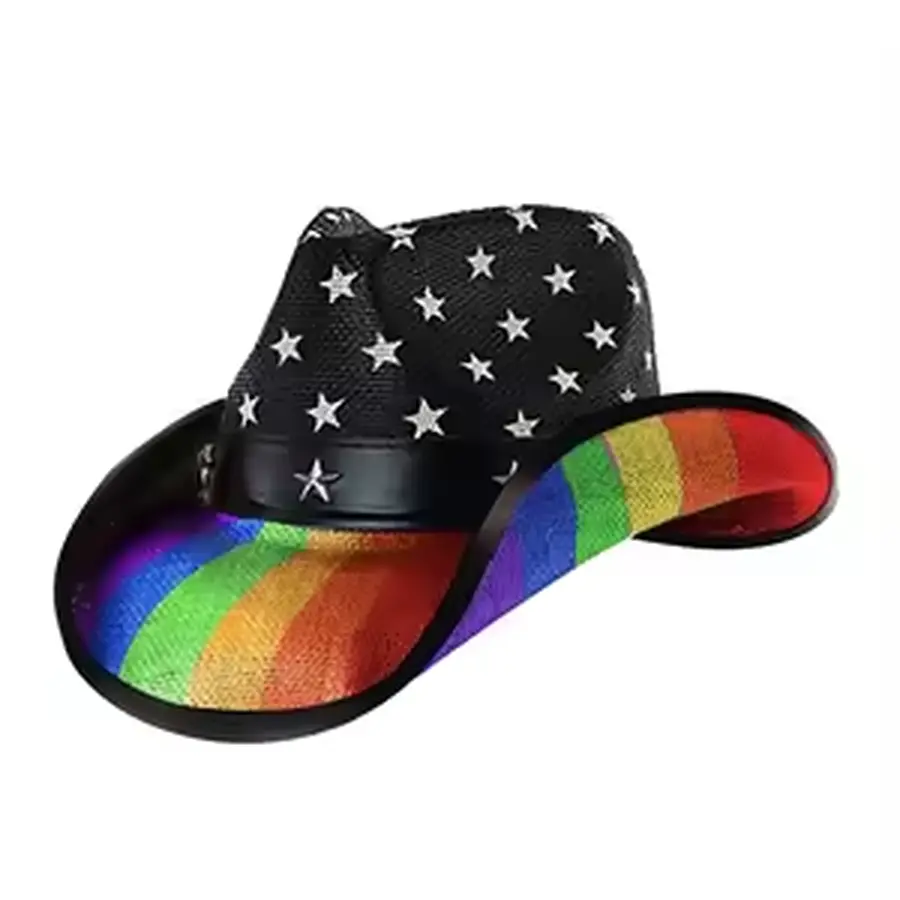
Buying wholesale cowboy hats for a western boutique is not the same as ordering a generic promotional hat. A boutique needs a repeatable silhouette, consistent sizes, private-label presentation and packaging that protects the crown and shaped brim. Buyers should approve a physical reference before placing a bulk order, then compare suppliers against the same specification.
This guide is for western-fashion brands, independent boutiques, festival-merchandise buyers and distributors preparing a private-label cowboy hat range. It focuses on what to put in a quotation brief and what to approve before production—not on promising a particular fit, fiber composition or performance from a product photograph.
Quick answer: what should a boutique send to a cowboy hat supplier?
Start with one target style and provide:
- Straight-on front, left-side, right-side, rear, top and inside reference photographs
- A description of the crown crease and the brim width, curve and side curl
- The intended material category and required composition information
- The target head-size range and proposed size breakdown
- Brand artwork for hatband, badge, label or other approved decoration
- Exact color references, including separate colors for the crown, brim and hatband
- Quantity **per style and color**, not only a combined total for the collection
- Packaging expectations, destination country and intended retail price position
- Target delivery date, shipping term and physical-sample sign-off requirements
A quotation that names the same silhouette but ignores the brim stiffness, size plan, trims or packing is not yet comparable.
1. Separate the retail assortment from the product specification
A boutique may need a restrained everyday western style, a resort or festival straw direction, or a bright novelty item. These are different product briefs even when they are all called cowboy hats. Define the customer and selling occasion before selecting a material or decoration.
A practical first assortment might be organized by **one hero silhouette**, a small set of approved colors and a documented size range. Treat each additional crown mold, brim shape, lining or specialty material as a separate development question. A photograph of a competitor's item is helpful to describe the desired shape, but do not assume the pictured material, construction or logo can be copied.
LOSTCAPS has an existing custom cowboy hats collection for browsing western-style product directions. The western cowboy hat with decorative band reference shows a creased crown, wide upturned brim and decorative-band options, while /products/rainbow-western-straw-cowboy-hat illustrates a much more colorful festival option. These catalog examples should not be confused with an approved private-label sample for your own project.
2. Specify the crown crease and brim shape from several angles
Western hats are immediately recognizable by their crown and brim, but descriptive terms such as classic western, pinched crown or wide brim can still mean different patterns. Ask the supplier to measure and photograph the actual target shape.
For the **crown**, record the front and side height, crease or indentation geometry, top shape, front-to-back depth and where the hat should contact the head. Confirm whether the sample needs a firm, shape-retaining construction or a softer feel.
For the **brim**, record the front and side width, the upward or downward sweep, the amount of side curl, edge binding or rolled finish, and how symmetric the curve should be. When the hat has a shaped brim, a single flat measurement does not describe how it looks when worn. Include side-profile photographs with a ruler and an approved reference sample.
Check the hat on a head form or intended wearer. A crown can appear correct in a front product shot but look too tall, too narrow or too sharply creased in profile. Approve shape before spending time on a decorative badge or branded packaging.
3. Compare straw, paper straw and felt-style materials by the real specification
Material descriptions require care. The word straw does not establish whether a hat uses natural plant fiber, paper straw, a blend or another woven material. Likewise, a felt-look finish does not prove that the product is wool felt. A buyer should request the supplier's specific material description, construction and composition rather than relying on category language.
Woven and natural-look straw directions
For a woven straw direction, request the exact fiber and construction in the quotation and sample. Paper straw, wheat straw and other natural-look woven fibers are different specifications, not interchangeable descriptions. Examine weave spacing, edge finishing, joining points, flexibility and visible surface variation. Ask whether the chosen crown and brim will maintain their intended shape during normal handling and packing.
Colorful festival or printed directions
The /products/rainbow-western-straw-cowboy-hat reference lists a lightweight woven straw construction with a printed or dyed finish. Use that as an illustration of a bold merchandising direction, not as evidence that a different custom color, print, material or finish is already available at the same quantity. When appearance relies on a printed brim or all-over color treatment, check color layout, surface coverage and rub or care behavior on a real sample.
Felt-style or heritage directions
The western cowboy hat with decorative band reference describes polyester fabric with a felt-textured surface, not wool felt. Its final composition, stiffness and finish must be confirmed during sampling. For a felt-style western hat, evaluate crown and brim stiffness, surface texture, dust or lint appearance, shaping behavior, and whether the intended private-label process is compatible with the material. Do not describe a felt-look product as wool or wool-blend without confirmation for that product.
For any material, ask about the actual care instructions and any documentation required by the destination market. A brim may provide some shade, but brim width alone does not substantiate a UPF rating or a quantified sun-protection claim.
4. Establish a size plan before issuing the bulk purchase order
Cowboy hats cannot be treated like an adjustable snapback. Define whether the proposed style has discrete head sizes, an internal adjustment feature or another tested fit system. Use head circumference as a reference, then confirm internal dimensions and wearing comfort on the actual construction.
Ask the supplier to show the intended size chart and identify the measurement method. Check the inner sweatband, crown depth, pressure around the forehead, ear clearance, and how the hat sits after the brim is shaped. If the range includes several sizes, specify the order quantities by size, not just by color.
For boutiques, repeatability matters: one physical sample in a single size cannot confirm that every size will have the same proportional appearance. Agree which sizes or a size-set sample need approval, and keep the approved chart with the production specification.
5. Design private-label details around the hat, not just the logo
A western hat's branding may sit on its band, exterior badge, woven label, inside sweatband, hangtag or retail packaging. Select a method that suits the actual material and silhouette.
Hatbands and decorative trims
State the material, color, width, placement and method of attachment for each band. If the hatband uses a buckle, stud, cord, ribbon or another detail, confirm its finish, comfort and security. A loosely specified decorative band can change the retail impression of an otherwise correct hat.
Badges, patches and printed details
Provide editable logo artwork and final dimensions. A metal badge needs a defined surface finish, attachment and inside comfort check. A woven label, print or patch has its own edge, color and attachment requirements. For an underbrim print, confirm print placement, alignment, color tolerance and material compatibility. These are sample-review options, not automatic features of every cowboy style.
Inside branding
Confirm size or composition labels, care wording, country-of-origin details and any importer information required in the selling market. Provide brand text as final artwork rather than letting the supplier invent legal wording. Use How to Specify Private Labels for Custom Caps: A B2B Buyer Guide for the broader label-specification workflow.
A digital mockup can help judge balance and scale. It cannot establish finished metal relief, adhesive strength, seam comfort or printing quality. Approve the actual finished decoration on the intended hat.
6. Protect the retail presentation during packing and shipping
A shaped crown and wide brim can be damaged by unsuitable stacking, compressed cartons or unprotected decoration. Packaging must be included in the quotation from the start.
Ask whether hats will be nested, supported with inserts, individually protected or boxed, and which approach preserves the approved silhouette. Confirm master-carton dimensions, quantity per carton, size and color assortments, barcode and hangtag placement, carton markings and handling instructions. A custom retail box can have a different cost and minimum than the hat itself.
For a wholesale boutique order, also define whether the warehouse needs a mixed-size assortment in each carton or separate cartons by style, size or color. The best packing choice depends on the actual hat stiffness and transport method. Review Private-Label Hat Packaging Checklist before confirming your final purchase order.
7. Build a physical-sample approval sheet
Do not approve a new western hat from only an AI rendering or flat front mockup. Request a physical sample with photographs taken from consistent angles. For a new silhouette, compare the sample against the approved reference and a numbered specification.
A useful approval sequence is:
- **Shape:** crown crease, height, brim width, sweep, symmetry and edge finish
- **Fit:** inside circumference, internal sweatband, size label and comfort
- **Material:** named composition, weave or surface, stiffness and approved color
- **Decoration:** hatband, badge or patch dimensions, artwork, placement and attachment
- **Workmanship:** joining lines, exposed edges, seam or trim security and inside finish
- **Packaging:** protection for brim and crown, packing labels and carton arrangement
- **Revision control:** one written list stating what changed, the revised reference and who approved it
Check that the sample returns to an acceptable silhouette after the agreed handling or packing trial. Record the inspection method and agreed tolerance; do not claim an unperformed durability or impact test. Use Custom Cap Sample Approval Checklist for a fuller physical-inspection process.
8. Interpret wholesale MOQ and sample lead time correctly
LOSTCAPS's public cowboy hat collection uses a **50-piece starting MOQ** for suitable standard custom projects. The western cowboy hat with decorative band reference specifies **50 pieces per color and style** and currently lists **7–10 days** as its sample lead-time estimate. Confirm the selected construction, decorative band, artwork and specifications before relying on that schedule.
For purchasing decisions, request the confirmed minimum **per style and color**. Do not assume that a request for 50 pieces split across five different colors or crown shapes qualifies as one 50-piece production order. A special crown mold, non-stock material, custom dye, new trim, bespoke retail box or complex printed treatment can change feasibility, cost, lead time and practical minimum.
The sample timing listed for that specific product is not a guarantee for every cowboy hat or every revision. Sample charges, specialized components and international sample shipping should be quoted separately. Confirm the bulk-production schedule only after material availability, final size/color allocation, artwork and physical sample approval are known.
For general minimum-order planning, see Low MOQ Branded Caps: What Buyers Need to Know Before Ordering. Request a specification-based quote through request a custom headwear quote rather than treating a category-level number as an unconditional contract term.
9. Compare suppliers using total delivered cost, not just the hat price
When comparing private-label wholesale quotes, use the same physical specification for each supplier. Identify the cap unit cost, sample fee, decoration setup or tooling, custom trim or packaging, quantity and size split, freight and applicable delivery term.
Request a named commercial term such as EXW, FOB, DAP or DDP when offered for the destination. Do not assume that an all-in price includes import duties, destination clearance, local tax or delivery to your boutique until those items are expressly stated in the quotation. Document who is responsible for import compliance and who approves final shipping marks.
Also ask who holds the reference sample, whether the approved construction can be repeated, and how future reorders will identify the correct material and trim versions. These controls can matter more to a boutique than a small initial unit-price difference.
10. Quote-ready checklist for western boutiques
Send this brief to request a custom headwear quote:
- **Buyer:** business name, selling country and planned retail channel
- **Reference:** chosen cowboy style, product URL, photographs or physical sample
- **Silhouette:** crown crease, height, shape, brim width, edge and side curl
- **Material:** exact requested composition or reference swatch, color and finish
- **Fit:** size chart, order breakdown by head size and agreed size-set check
- **Branding:** hatband, badges, labels, underbrim artwork and final vector files
- **Order:** quantity by style, color and size, plus target reorder direction
- **Packaging:** hangtags, barcodes, individual protection and master-carton sorting
- **Approval:** requested physical sample, revision procedure and inspection criteria
- **Delivery:** destination, desired arrival date and named shipping term
LOSTCAPS describes its background as **15 years of manufacturing and export experience**. That experience can support a practical specification discussion, but buyers should still assess the selected sample, project quotation and documented quality checks rather than relying on generic supplier claims.
FAQ
What is the MOQ for wholesale private-label cowboy hats?
LOSTCAPS currently lists a 50-piece starting minimum for suitable standard cowboy-hat programs. The decorative-band western cowboy hat reference specifies 50 pieces per color and style. Confirm the final MOQ for the exact style, color and trim specification; special materials or mold changes can increase it.
How long does a custom cowboy hat sample take?
The decorative-band western cowboy hat linked in this guide currently lists 7–10 days for sampling. Confirm the start date after the construction, artwork and specifications are agreed. A new material, mold, complex hatband or sample revision can change that estimate. Confirm the delivery date and international sample freight separately.
Can a boutique order several colors in one 50-piece batch?
Do not assume so. Quote each style and color separately. Standard cowboy-hat planning starts at 50 pieces per selected style and color; custom dyes, molds or special components may require a larger minimum.
Is paper straw the same as natural straw?
No. Paper straw, plant-based straw and other natural-look woven fibers are different material descriptions. Request the composition and construction of the selected sample before printing any material claim on a hangtag or product listing.
Can I add a private-label hatband, badge and inside label?
These are possible customization directions shown on LOSTCAPS cowboy-hat product references. Feasibility depends on the chosen material and style, the artwork, attachment details and practical order quantity. Approve every branded component on the physical sample.
How do I prevent wide cowboy brims from losing their shape in transit?
Specify the intended brim curve, agree a packing method with physical protection or appropriate nesting, and inspect a packed sample or approved packing trial. Neither a photograph nor a generic carton specification proves that a particular brim will resist deformation.
Can I claim that my private-label cowboy hat is waterproof or UPF rated?
Not from the appearance of the brim, weave or fabric alone. Any specific performance or regulatory marketing claim needs evidence applicable to the final material and finished product. Agree what documentation and testing your selling market requires before production.